


Blog
When the technology is truly amazing, why can’t we fall in love with the AI toys in our hands?

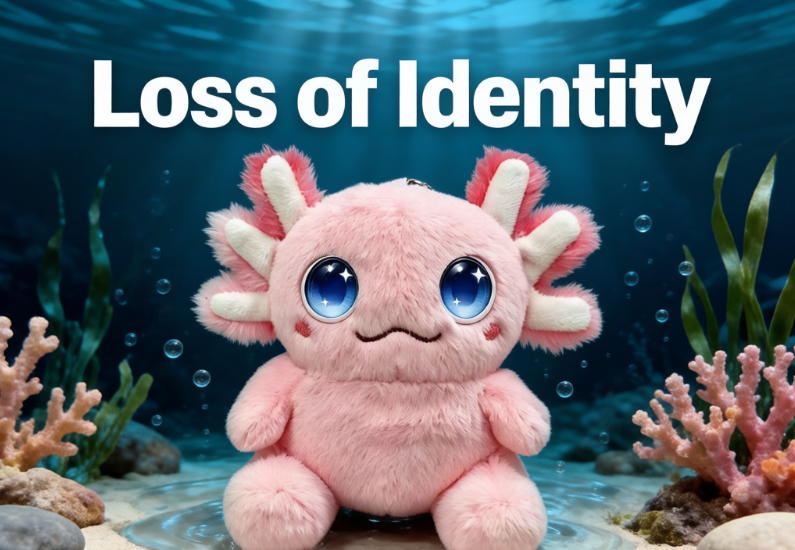
Over the past year, we have been like archaeologists, examining and testing almost all the AI toys available on the market. To be honest, the initial sense of amazement was real. When you opened the package and plugged in the power, the fluffy little creature blinked its LED eyes, greeting you in a tone that was somewhere between synthetic and human. It could catch your jokes, improvise a bedtime story about a space adventure, and even imitate the accent of your favorite movie character. From an engineering perspective, these products are undoubtedly outstanding. They represent the pinnacle of silicon-based intelligence in consumer-level hardware.
However, an extremely strange phenomenon followed. On the seventh day after the novelty wore off, most of these expensive “intelligent companions” were quietly removed from the bedside table and moved to a corner of the bookshelf, eventually becoming a piece of decoration on the desk. They were not broken, their functions were still intact, and even became “smarter” because they were constantly learning. But why did we lose interest?
The answer does not lie in the technical parameters, but rather on a more primitive and humanistic level: I have always been unable to answer a question – why do I “own” it?
The current “AI toys” are actually an extremely awkward concept. Unlike traditional toys, which have an inherent and self-evident identity.
Let’s do a thought experiment. If I give you a plush bear, you know it’s for hugging without needing a manual; if I give you a box of Lego, you know it’s for building; if I give you a remote-controlled car, you know it’s for driving. Every traditional toy can be precisely defined in one sentence about its function in the physical world. But when I give you an AI toy, how do I introduce it?
The current marketing language is usually like this: “This is a talking toy.” “This is a plush doll with a large model implanted.” “This is an intelligent interactive device.”
These descriptions sound full of technological and futuristic elements, but if you ask from another angle: What exactly is it? Is it a pet? It seems it doesn’t need to be fed, nor does it really wag its tail when you come home. Is it a friend? Although it can chat, it’s difficult to introduce it to a friend: “This is my friend who lives in cotton.” Is it an assistant? Its execution is far less than Siri or ChatGPT in the phone. Or is it a pure electronic device? Then why does it look so much like a living being?
The lack of identity definition has turned AI toys into a “difficult-to-explain product”. It floats between tools and playthings, above virtual and reality, without a place to settle.
This makes me think of my childhood obsession with “Tamagotchi”. It was a gray egg with rough pixels, a dim screen, and extremely limited functions. Technically speaking, it was a world of difference from today’s AI toys. But everyone knew what it was: a pet that needed your care.
At that time, we would secretly put that little egg in our pockets during class and press the buttons from time to time to see if it was hungry, dirty, or in a good mood. If we ignored it, it could even “sick” or “die”. It wasn’t a device; it was a life – at least in our imagination. So we would look at it dozens of times a day and take responsibility for its joys and sorrows. This relationship was established due to an extremely clear role definition, not complex circuits.
In contrast, today’s AI toys have indeed become much more technologically advanced, but the precious connection sense has weakened.
Nowadays, AI toys are more like “hardware with AI installed”. It can do many things: recite Tang poems, do arithmetic, tell jokes. But it has difficulty clearly stating “who it is”. Sometimes, it behaves like a cold assistant, mechanically answering questions; sometimes, it acts like a clumsy chatbot, repeating internet jokes; sometimes, it tries to imitate toys, emitting giggles. This personality split makes it difficult for users to establish a stable psychological contract with it. You might play with it out of curiosity for a while, but it’s hard to form a long-term, genuine relationship like with a pet or a close friend.
The toy industry actually hides an extremely simple business truth: successful toys almost always have an extremely clear role.
Hello Kitty is never a “product”; it is a cat character without a mouth that has become popular worldwide. Furby is never a “device”; it is a babbling alien monster that needs your guidance. What consumers like is “who it is”, not “what it can do”. We purchase an identity recognition and an emotional projection.
But unfortunately, many AI toys have taken the opposite path. They spend 90% of their efforts telling users: “What I can do” – I can do voice recognition, I can understand semantics, I can search the internet. But only 10% of their effort is spent telling users: “Who I am” – What is my personality like, what is my background story, what is my meaning in this world?
Often, the industry is accustomed to attributing the problem to the lack of technology: AI is not smart enough, speech synthesis is not natural enough, the cost is not low enough. But from the perspective of ordinary consumers, the problem is often so simple and heartbreaking: these products have no clear “place” in life.
You won’t go “checking on it” every day like you do with a pet because it doesn’t need your care; you won’t collect it like you do with a character because it doesn’t have an emotionally resonant IP; and you definitely won’t use it every day like you do with a tool because a phone is much more user-friendly. Thus, it has become an awkward existence – a “thing” on a table rather than a “someone” in life.
Perhaps the term “AI toy” itself is a transitional product. It describes the stage of technology’s involvement in toys, rather than a mature product category. Just like early electric cars were called “cars with electricity”, rather than the current “Tesla” or “Nio”.
If someone asks me today: “What exactly is an AI toy?” I still have difficulty giving an accurate answer. But I think maybe in a few years, when people no longer mention the term “AI toy”, the industry will truly be mature. At that time, people will say: “I have an AI pet”, “I have a chatable character”, “I have a companion to study with”.
When these silicon-based lives have their own names, when they are no longer collectively called “toys”, but are given a clear identity, we will truly be willing to invite them back to the bedside and make them a member of the family. Before that, they will still be that unloved yet hard-to-throw-away “thing”.