


Blog
When the allure of AI toys fades away, who is swimming naked? Who is building the fortress?

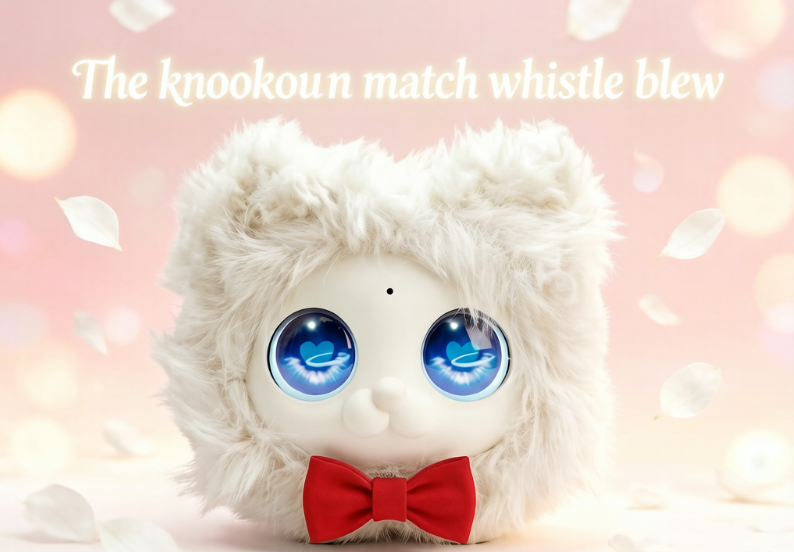
If you are still in the meeting room today in 2026, seriously arguing whether “AI toys are a trend or not”, then I’m sorry to say that you might have missed the last chance to board the ship. The actual temperature of this industry is no longer the “boiling frog” scenario of verifying feasibility, but a worsening, cruel natural selection. The current battlefield no longer has any romantic imagination; there is only raw reality: some teams are stuck at the final stage of mold production, with the product always remaining on the “about to go into mass production” PPT; some teams have gone through great hardships to put the goods in the warehouse, only to find that the sales rate is pitifully low, and the inventory has become the straw that breaks the cash flow; while those who have managed to sell some goods are now fighting tooth and nail over a few cents of profit and the harsh terms of the channel. AI toys have fallen from the “concept phase” floating in the air to the hard ground, officially entering the truly “life-and-death situation”.
The prelude to this transformation was opened by the rapid demystification of technology. Just a year ago, allowing machines to have smooth conversations was still regarded as a kind of technical magic, but now, large language models, speech recognition and synthesis technologies have been highly modularized and have become “standard products” that can be seen everywhere in Shenzhen’s Huaqiangbei. When conversation ability and basic interaction are no longer the exclusive secrets of a few geeks, the technical barriers collapse. Along with this, there is no more romantic imagination on the battlefield; only raw reality: some teams are stuck at the final stage of mold production, with the product always remaining on the “about to go into mass production” PPT; some teams have gone through great hardships to put the goods in the warehouse, only to find that the sales rate is pitifully low, and the inventory has become the straw that breaks the cash flow; while those who have managed to sell some goods are now fighting over a few cents of profit and the harsh terms of the channel. AI toys have fallen from the “concept phase” floating in the air to the hard ground, officially entering the truly “life-and-death situation”.
This transformation’s prelude was initiated by the rapid demystification of technology. Just a year ago, allowing machines to have smooth conversations was still regarded as a kind of technical magic, but now, large language models, speech recognition and synthesis technologies have been highly modularized and have become “standard products” that can be seen everywhere in Shenzhen’s Huaqiangbei. When conversation ability and basic interaction are no longer the exclusive secrets of a few geeks, the technical barriers collapse. Subsequently, there is a serious homogeneity in the products on the market, with a large number of “speakable plush toys” competing on the same track, looking alike, speaking alike, and even having similar recommended quotes. For users, why should they pay for your premium when they face functionally similar products? Even more cruel is that users’ patience is running out. The initial stunning effect quickly wears off with repetitive conversations and lackluster interactions. When the “novelty” as a cheap stimulant fails, retention rate becomes the sole criterion for evaluating the product. When the core selling point of a product becomes everyone’s factory standard, it is no longer a selling point but a passing grade.
At this stage, if you still simply view AI toys as a “technical product” to polish, your thinking has basically gone off track. On the current playing field, what determines life and death is the systematic ability from top-level design to implementation execution. First, there is the logical reconfiguration of the product structure. You must clearly think about what you are selling to the users – is it “the function of chatting”, “the service of emotional companionship”, or “a flesh-and-blood, story-telling, and character-driven character”? Many products failed because they were not defined clearly from the very beginning. Users do not buy a microphone and a speaker; they buy a listening partner. Second, cost control. This directly sets the life-and-death line for the enterprise. AI modules, flexible plush toys, exquisite packaging, logistics and warehousing, these cold numbers add up to your BOM cost. If the gap between the retail price and the cost is too narrow to cover marketing and channel expenses, then you are not in entrepreneurship but in charity. Finally, and the most underestimated point, is the construction of channel capabilities. AI toys are not the kind of traditional products that can automatically generate sales just by being placed on the shelves; their value is implicit and must be perceived through demonstrations, storytelling and interactions. Douyin influencers, Xiaohongshu recommendations, offline experience stores are no longer “optional” for marketing but “essential” for survival. Whoever can deliver the product to the user and present the intuitive interactive experience will have the key to traffic. Without exaggeration, the competition in AI toys at this stage is essentially a sales war about “how to sell the goods”.
The following days may be tough. Those “pseudo-AI” speculators who merely add voice-activated modules to traditional toys will be the first to be eliminated. They lack the ability for continuous content updates, and after users play it twice, they only say those fixed lines, and the enthusiasm quickly cools down. Similarly, there are also those nerds who are obsessed with technical details and “only know how to make products”. They naively believe that “fragrant wine doesn’t mind being far from the market”, but in an era of scarce attention, no one will actively discover you. Moreover, the weak who lack supply chain resilience will also be eliminated. They cannot control costs, cannot guarantee the stability of quality, and keep delaying delivery dates. In the business world, if you cannot deliver goods on time, of the same quality, and in the required quantity, even the best ideas are worthless.
On the other hand, those survivors who can survive through cycles often hold different survival chips. Some are “salesmen” with channels. They may not be the most knowledgeable about AI technology, but they understand human hearts and traffic, and have a vast distribution network. For them, AI toys are just a new and more sellable category. Some are “dream-makers” with deeply rooted characters in their hands. AI is just an enabling means, and the core is still that “living IP” that makes users emotionally connect. Others are “pragmatists” who control the supply chain. They have strong factory resources in Dongguan or Shenzhen, can push costs to the extreme, and can ensure the stability of quality. They are the “base” of this industry.
Many people are still asking themselves in confusion: “Can AI toys still be made?” In fact, this question has lost its meaning by 2026. The trend has already taken shape, and the river is flowing. More importantly, you need to figure out in what form to enter this industry. Should you continue to be a “product that can speak”, make a quick profit and then leave? Or should you design it from the very beginning as a “sustainable user relationship system”? The AI technology itself is now just an entrance ticket, and the price is becoming increasingly cheaper. What really makes a difference is your design ability for the product structure, your control ability over channels, and your profound insight into the psychology of users. In this new game, be willing to accept the outcome and survive the fittest.