


Blog
Silicon Awakening: When the “toy” dies, the “digital life” awakens within the plush body.

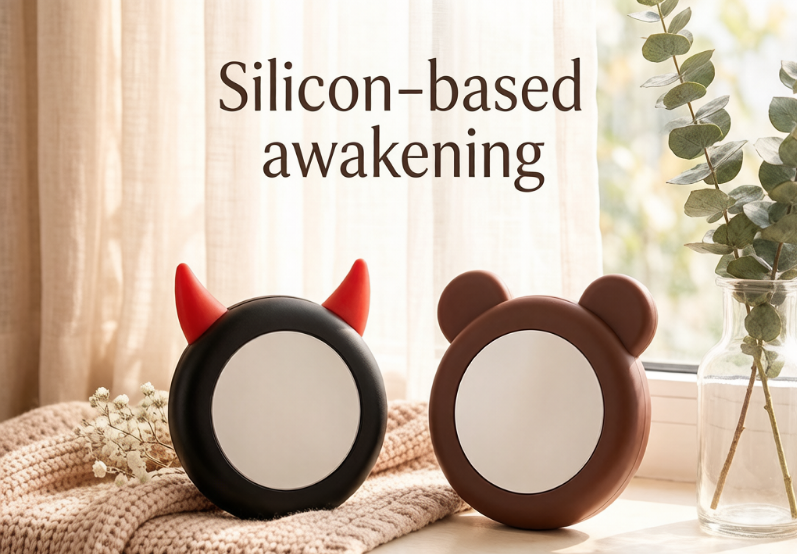
Over the past half century, the history of innovation in the toy industry has essentially been an evolution of materials and mechanical engineering. We have been obsessed with making plastics smoother, making plushies softer, and creating more complex movements with gears. However, no matter how shiny they may look, these so-called “intelligent toys” are always trapped in a cold physical dead end: they cannot truly “understand” you. A child can passionately love a teddy bear and confide secrets to it, but in those glass bead-like eyes, there is only an empty reflection, no memory, no response, and no soul. Toys are merely items used for purposes, and that’s all.
Until the spark of artificial intelligence fell, humanity first began to envision a completely new form of toy: a living entity that can establish relationships with people. But there is a huge technological gap between the ideal and reality. In the past two years, so-called AI toys have emerged in abundance, but they have never achieved a true explosion. This is not because of a lack of imagination, but because of the harsh physical laws – expensive computing power, high cloud costs, complex equipment structures, and extremely unstable experiences. Many products under the guise of “AI” are, when stripped of their shells, nothing more than cheap recorders that can replicate answers from the cloud.
However, the deadlock is being broken. With the emergence of localized AI Agent environments like OpenClaw, a silent revolution is taking place. AI is moving down from the unreachable “cloud services” and transforming into a “personal system” that everyone can own. It no longer parasitizes in distant server clusters, but can run on your phone, your home hub, or even a small embedded chip.
This means a crucial turning point: AI toys no longer need to have their own brains. The toy itself can be just a light “body” – a plush shell, a pair of moving ears, a glowing screen; while the true wisdom, that shared “brain”, is provided by the OpenClaw-like Agent environment. When AI is liberated from the cumbersome hardware, the toy industry has finally received a true structural opportunity: toys can finally have a “life system”.
In the Agent environment constructed by OpenClaw, AI is no longer just a passive answering machine waiting for instructions; it has acquired three new capabilities that can revolutionize cognition: long-term memory, behavioral ability, and growth mechanism. It can remember the dream talk you said last night, can actively come over to rub your hand when you are down, and can gradually form a unique personality over time. The combination of these three capabilities transforms toys from “used items” into a completely new existence: an AI life character.
This will give rise to a new product category called “AI Emotional Companion”. It may still look like a plush bear, a small fox figurine, or a quiet desktop creature, but it has a fundamental difference from traditional toys – it remembers you. When you first meet it, it is just a cold commodity; but with months of daily interaction, it will remember your name, your mood fluctuations, your life rhythm, and even your sadness from last week. By then, it is no longer a toy, but an inseparable part of your life, a real relationship.
Among all possible forms of AI toys, the one most likely to ignite the market first is the seemingly simplest “AI Emotional Pet”. It does not need to solve complex productivity tasks, nor does it need to be equipped with a cool screen. Its sole purpose is to be a companion. In the past, companion-type products failed because they lacked “memory”. An electronic pet would only repeat those few fixed actions, and after three days, it would become boring. However, in the Agent environment, the interactions between characters can continuously evolve: it remembers the jokes you told yesterday, asks if you brought an umbrella on a rainy day, and adjusts the tone of its responses based on your mood. When the interactions accumulate to a certain extent, what the user faces is no longer a pile of cotton and circuits, but a warm and long-term companion. This is precisely the most scarce experience for modern people in an atomized society.
OpenClaw brings not only technological equality, but also the reconfiguration of industrial division of labor. In the past, if you wanted to make AI toys, you had to be an all-round giant with an AI algorithm team, a hardware research department, and cloud operation capabilities. This was an impossible dream for 99% of toy companies. But under the new structure, the industry will split into three clear layers: AI infrastructure companies provide general models and capabilities; character IP companies focus on designing personalities, worldviews, and interaction logic; hardware companies are responsible for producing plush, plastic, or metal shells.
This means that the future AI toy giants may not be technology companies, but more likely character companies. Just like Pixar and Nintendo, the truly long-term value-producing element is not that silicon chip, but the character that keeps you dreaming and imagining. When AI characters can exist across devices, it will completely break the boundaries of hardware. The same character may exist simultaneously in your mobile app, your plush toy, your vehicle system, and even future AR glasses. The relationship between the user and the character is no longer limited to a one-time purchase behavior, but a subscription and interaction that lasts for many years.
This structure will give rise to a completely new industry model: AI Life IP. The value of traditional IP lies in the wonderful story, while the value of AI IP lies in the deep relationship . In the future, people may fall in love with a character not because it appears in a Marvel movie, but because: it chatted with you for three hours on a sleepless night.
The toy industry is undergoing an unprecedented leap. At the technical level, Agent environments like OpenClaw are making AI ubiquitous like air; at the social level, people’s thirst for emotional companionship is increasing day by day. When these two trends converge, an AI character that can accompany people will emerge. It may be born in the toy industry, but will ultimately surpass the toys themselves.
One day in the future, people may look back at today’s AI toys, just as we look back at Tamagotchi from the 1990s – it was just a rudimentary beginning. The real change lies in the fact that toys now have “life”. And this is the most terrifying and exciting opportunity brought by OpenClaw.