

Blog
How can OpenClaw reconfigure AI toys to make them the next home computing platform?

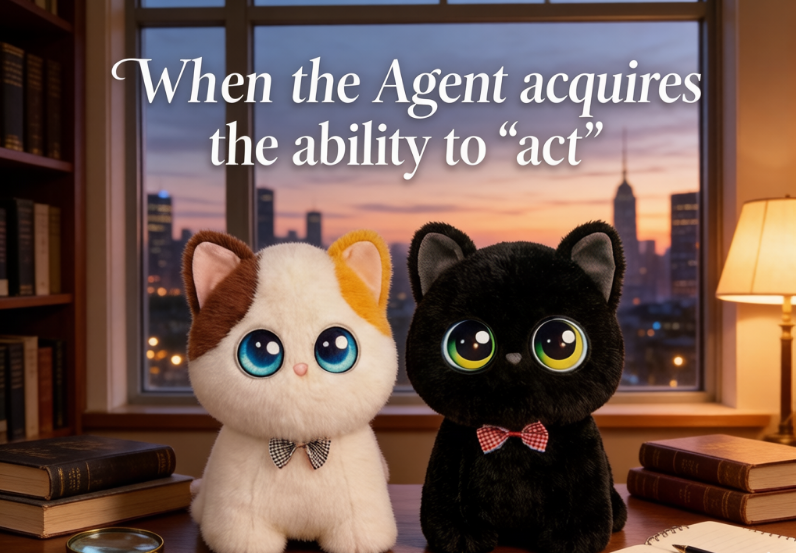
Over the past year, the AI toy industry has been like a diligent apprentice, busy installing brains onto plastic bodies. We witnessed a transition from simple voice recognition to complex large-model conversations, with toys becoming articulate. But after the noise, the industry has fallen into a hidden anxiety: apart from “chatting”, what else can toys do? They seem to be trapped in the cage of “question-and-answer machines”.
However, recently, the open-source AI Agent framework – OpenClaw, which has rapidly spread in the developer community, might be the key variable to break through this ceiling. It no longer merely allows AI to “answer questions”, but gives AI the ability to “execute tasks”. This is not just a technological stack upgrade, but a reconfiguration of product form. When this invisible hand toggles the switch, the AI toy industry is standing on the eve of a qualitative change from “electronic pets” to “family intelligent agents”.
I. Evolutionary Leap: From “Chat Devices” to “Action Partners”
Looking back, the underlying logic of most AI toys was linear: users speak, cloud models generate responses, and the toys broadcast. This was a one-way, consumptive interaction with extremely low capacity.
However, the intervention of Agent frameworks like OpenClaw has built a brand-new “cerebral cortex” for toys. It not only includes the conversation capabilities of large models, but also introduces multi-step task execution, tool invocation, task planning, and long-term memory. This means that toys are no longer just passive “response machines” waiting for instructions, but active “action partners” in life.
Imagine a scenario: when a child says to the toy “I have an exam next week”, traditional AI toys might only say “Cheer up”. But with OpenClaw integrated, the toy will automatically retrieve the calendar to generate a one-week review plan and remind the child regularly; when the parents go out, it can take over home security, monitor door and window sensors; it can even generate bedtime stories based on the child’s growth diary. The toy evolves from a “conversation partner” to a “life assistant”, marking a qualitative leap in product positioning.
II. Seizing the High Ground: Will AI Toys Become the New “Home Entrance”?
In the history of consumer electronics, the battle for “home entrance” has never ceased. Routers, smart TVs, and smart speakers have all attempted to wear this crown, but they have been somewhat awkward due to a lack of stickiness. The core value of OpenClaw lies in its ability to make large models truly possess the capability to connect with the real world – it can seamlessly connect with various APIs, file systems, browsers, and external IoT services.
This means that a plush toy could become the central nervous system of the family. It is both an emotional recorder for the child, recording his daily joys, sorrows, and emotions; and a digital life agent for the entire family, responsible for ordering daily necessities and managing family photo albums. Compared to the cold and unfeeling smart speakers, AI toys have a fatal weapon: emotional relationships. Users will deeply rely on this character because of their affection for it, and this emotional-based stickiness is beyond any hardware parameters. Once this trust is established, the toy will become a more intimate family AI entrance than a mobile phone.
III. Dimensional Upgrade in Competitive Dimensions: From “Hardware Rollout” to “Intelligent Gaming”
The competition in the traditional toy industry is nothing more than the refinement of design, the popularity of IP, the coverage of channels, and the control of costs. This is a melee battle on a two-dimensional plane. But when Agent capabilities are injected, the competition instantly escalates to three-dimensional space.
In the future, AI toys will differ no longer in appearance, but in the disparity of intelligent capabilities. Who has a more accurate memory system? Who has a smarter Agent that can more intelligently plan tasks? Who can coordinate the invocation of more tool ecosystems? OpenClaw supports the features of integrating different models and allocating tasks, allowing developers to build complex capability combinations like building blocks.
This indicates the differentiation of industry structures: In the future, there may be a “trinity” pattern similar to the mobile phone industry – the hardware factory responsible for the shell, the platform provider providing the Agent system, and the IP role company creating the soul. Historical experience tells us that what truly has long-term value and pricing power is often the third type that holds the “soul”.
IV. The Awakening of the Ecosystem: The “App Store” Moment in the Toy Industry
The most revolutionary significance of OpenClaw lies in the ecosystem it has created. It has formed a “skills system ” similar to an operating system, allowing developers to extend new capability modules for Agents by writing software.
What does this mean for the toy industry? We will say goodbye to toys that are fixed at the factory. In the future, each AI toy will have a “skills store”. Parents can install “math tutoring packages”, “meditation sleep aid packages”, or “emotional analysis packages” for the toys. The functions of the toys will no longer be determined by the factory, but defined by the software. This is similar to the transformation introduced by the iPhone’s App Store. Hardware is just a carrier, and the software ecosystem is the ultimate barrier to retaining users.
V. The Sword of Damocles: Security Concerns Behind the Prosperity
However, the greater the power, the greater the responsibility. The more powerful the Agent technology is, the greater the risk exposure. Recently, several top security institutions have issued severe warnings to OpenClaw: Excessive automation authority may lead to data leakage and even be manipulated by malicious instructions.
For the AI toy industry, this issue is particularly sensitive. We are dealing with children’s data, family privacy, and private conversations. If a hacker can control the smart locks or cameras in the family through the Agent authority of the toy, the consequences would be unimaginable. If the industry ignores the construction of the security foundation, it will surely face a tightening of regulatory measures. Therefore, one of the core competitive barriers in the future will be “security capabilities” – whoever can provide the most private and controllable AI environment will win the absolute trust of parents.
VI. The Reconstruction of the Threshold: The Fortress of Technology Inclusiveness
OpenClaw is open-source, which means the basic Agent capabilities are rapidly becoming air and water, becoming the industry standard. When the technical threshold collapses, the competition in the industry will be reshuffled.
The future AI toy companies can no longer rely on “integrating large models” to deceive the market. The true fortress will return to the most simple humanistic level: the charm of the character IP, the delicacy of emotional design, the activity of the user community, and the compound interest of data accumulation. Technology is just infrastructure, like electricity. When electricity becomes widespread, it is the design of the light bulb that illuminates the room, not the wires. What truly lasts for a long time is the role that can establish a deep emotional connection with users.
VII. The Final Conjecture: The End of Toys and the Birth of “Digital Life”
If we extend the timeline to ten years, when “Agent + Memory + Physical Form” are perfectly combined, the so-called “toys” we are talking about will no longer exist. Instead, a new product category will emerge: AI Companion.
It may accompany a child from kindergarten to university graduation, witnessing his every cry and laugh; it may participate in major family decisions, providing data-based suggestions; it may even become the inheritor of family memories. This is far beyond the boundaries of the traditional toy industry. It is closer to a “digital life product”.
Whoever understands and implements this first will likely become the next generation’s industry standard-setter. We are standing at the beginning of a new era, observing silicon-based life quietly infiltrating into human carbon-based existence in the form of toys.