

Blog
The Creator in the Vacuum of Channels: The Birth of an AI Toy Collection Store and a Trillion-Dollar Offline Entrance

In 2026, the AI toy industry is standing at a delicate and crucial crossroads.
On one hand, we are witnessing an unprecedented “product explosion”. Walk into any technology exhibition hall or scroll through crowdfunding platforms on your screen, and you will be overwhelmed by a dazzling array of forms: from AI companion plush cats that can blink, to electronic pets that can sense emotions, from smart accessories hung on backpacks to desktop robots that can run and jump. These products not only have exquisite appearances but also possess a rudimentary “vitality” enhanced by algorithms. They have triggered viral dissemination on social networks, with countless KOLs (key opinion leaders) chatting and laughing with these silicon-based creatures in live-streaming rooms, reaping the audience’s amazement and wallets.
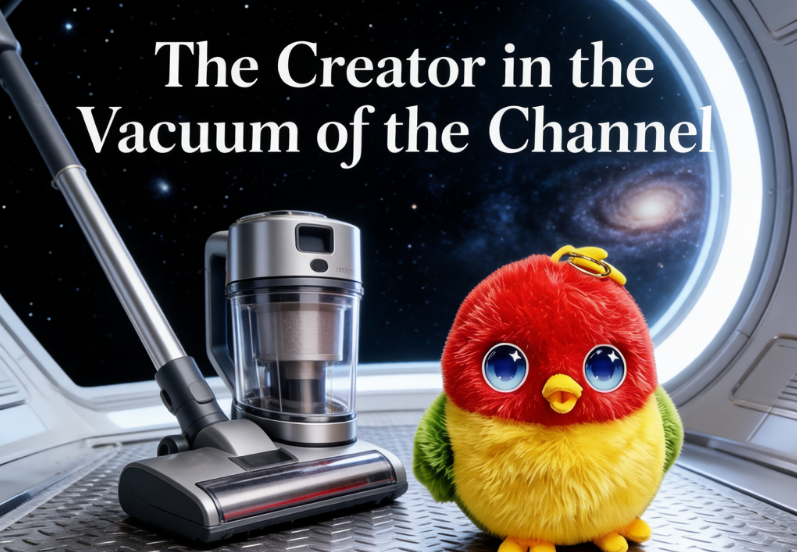
However, when we shift our gaze from the dazzling products to the transaction channels, an extremely bizarre sense of fragmentation greets us. Although products are flying everywhere, the offline spaces that carry these products remain a desert. AI toys are flooding the consumer market at an unprecedented speed, but the “offline organs” that can carry and nourish them have yet to be born.
This coexistence of “excess products” and “vacuum channels” precisely indicates the most fascinating moment in business history – a huge structural opportunity is emerging, namely the “AI toy collection store”. If this model can be verified, it is far more than just adding another retail store; it is likely to become the offline heart of the entire AI toy industry, the first physical entrance connecting silicon-based life with carbon-based users.
I. The Prisoner of Experience: Why Online Can Never Define AI Toys?
Observing the current AI toy market, we find an extremely reliance on online traffic situation. Most brands huddle in the virtual shelves of Tmall, JD, and Douyin, relying on exquisite short videos and live-streaming slices to showcase products. Users are often persuaded by the content and then make impulsive purchases.
This sales logic is valid for traditional toys, but it is a disastrous mismatch for AI toys.
Traditional toys sell “visual value”. A Transformer figure, once you understand its transformation structure, you understand its value; a Barbie doll, once you are attracted by her clothes, you will buy it. Pictures and videos are sufficient to convey these messages.
But AI toys sell “interactive value”. Their core value lies in whether they are intelligent? Are their reactions interesting? Can they sense my emotions? Have they remembered what I said? These intangible interactive experiences that cannot be conveyed by any high-definition video are what you can capture when filming it, but you cannot capture the spirit when it looks at you and tells a joke.
This means that AI toys are inherently “anti-online”. They must be touched, conversed with, and interacted with in a real way. Therefore, although products are flying everywhere, consumers are like a group of people groping in the dark, unable to truly perceive the soul of the product. This directly leads to high return rates and the gap between product expectations.
II. The Echo of History: The “Mega Man” Moment in the Pop Culture Industry
History does not repeat itself, but it always rhymes. If we turn the clock back to a decade ago, the pop culture industry was also standing on the same ruins.
At that time, the pop culture market already had designers, IPs, and decent products. But all the brands were scattered in various corners: scattered small stores, obscure exhibitions, underground studios. Consumers wanted to buy a blind box, but they didn’t know where to look. The lack of channels stifled the industry’s imagination.
It was not until Pop Mart (Pop Mart) emerged that everything changed. It did not attempt to create more IPs, but did something seemingly simple yet highly disruptive – established the “pop culture collection retail” channel. It brings together the brands of different designers into a bright, fashionable and standardized space. This not only solves the users’ search costs, but more importantly, it defines what “trendy toys” are and creates a kind of “shopping” pleasure.
In a sense, the AI toy industry truly went from being a niche to a mainstream one, not because of the IP “Molly”, but because of the standardization of the channels. Today’s AI toy industry is standing on the same cliff edge, waiting for that “definer” to emerge.
III. The mission of the collection store: not just selling goods, but the “creator”
The reason why AI toy collection stores have the opportunity to become the super entrance of the industry is that they can solve the three major problems of the current market at one stroke.
Firstly, it solves the “experience gap”. The collection store is a huge “trial field”. Consumers can compare the touch sensation of AI pets, test the flexibility of robots, and feel the voice interaction of plush toys in the same space. Through this immersive and real interaction, users can truly understand the product value and thus have an inner desire to purchase, rather than being impulsive consumers deceived by short videos.
Secondly, it solves the “cognitive blind spot”. Currently, the vast majority of ordinary consumers even don’t know that “AI toys” as a category already exists. The collection store is like a science popularization museum. When a person walks into the store and sees dozens of various forms and various functions of AI toys coexisting harmoniously, he will be instantly shocked: this is not a single freak, but a booming emerging industry. The establishment of this kind of cognition is something that a single brand cannot achieve.
Finally, it solves the “industry island”. For AI toy brands, the collection store is not only a sales channel, but also a brand showcase runway. New brands can reach precise users at a low cost by entering the collection store; while the collection store itself can also hold industry activities such as new product launches and AI character meet-and-greets. When more and more brands gather here, this channel naturally becomes the nerve center of the industry.
IV. The competition for entrances: from “retail stores” to “new species”
Many people mistakenly think that AI toy collection stores are just “toy-selling stores”, which is a fatal misunderstanding. If it only stays at the retail level, it is destined to be defeated by e-commerce. The truly valuable collection stores have not only shelves as their core assets, but also “entrances”.
When consumers want to experience AI toys, the first place they think of must be here; when AI toy brands want to enter the offline market, the first channel they think of must also be here. Once this mental occupation is completed, the collection store is no longer just a simple B2C business, but a platform-level power.
In such a structure, the store is both an experience space and a brand display space; it is both a retail channel and a collector of user data. It may even evolve into a new social place – parents gather here to exchange parenting experiences, children exchange the cultivation experiences of AI pets here.
V. Conclusion: The Future Appearance
As the AI toy industry continues to evolve in the coming years, we are likely to see a brand-new retail species emerge: AI toy experience collection space.
In this space, you are no longer just buying things. You can take your children to watch the football match of AI robots, read picture books with AI plush toys, and even participate in the offline fan meeting of a popular IP. Shopping is just an accessory, while “experience” and “social interaction” are the main courses.
This space is different from the cold traditional toy stores and the technology product stores full of electronic radiation. It is more like a new type of urban living room that integrates technology, entertainment and emotion. In this living room, silicon-based life has for the first time found a warm habitat, and humans have found the best way to coexist with the future.