


Blog
Reinvention of the Creation Logic: From “Technology-Oriented” to “Character-Oriented” Evolution Theory of AI Toys

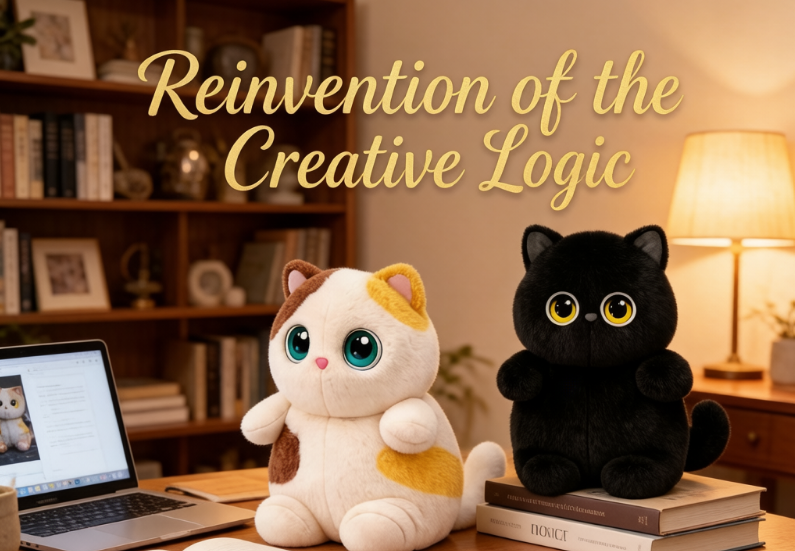
In this bustling gold rush of the AI toy industry, the vast majority of miners dig in the wrong place at the first shovel. Limited by the instincts of geeks, entrepreneurs often rush to showcase the muscle of their technology, getting lost in the arms race for lower latency, higher computing power, and more complex sensors, attempting to create a “chatting toy”. However, the harsh market feedback is like a bucket of cold water: truly products that survive the cycle and gain users’ emotional recognition rarely emerge from the oscilloscope of the laboratory. They all, without exception, originate from profound insights into the relationship between users and characters.
Technology is merely the cold skeleton, while characters are the warm flesh and soul. The birth of an AI toy is not a dull engineering research process, but a sacred creation process. This process usually follows four rigorous and emotional steps: anchoring the direction, designing the character, selecting the technology, and implementing production.
In the AI toy industry, the choice of direction is often more fatal than the quality of execution. Many teams overlook the most fundamental question before the start: What is the core demand you want to solve? Is it a functional tool to assist learning, an emotional comfort companion, a partner-like teammate, or a symbolic entity based on a specific culture? To verify the correctness of the direction, we need to test it with three extremely sharp reality prisms: Do users really need it? Will they use it for a long time? Will they actively recommend it to friends? If a product can give affirmative answers to these three questions during the conception stage, then its foundation is solid. Otherwise, those products that are obsessed with technical parameters but ignore users’ emotional needs are destined to be fleeting industrial garbage.
If direction is strategy, then the character is the core of tactics. Users will never fall in love with a piece of code, an algorithm, or a chip, but they will definitely fall in love with the chubby, a bit clumsy “Dawei”, and the stubborn “Pikachu”. In the world of AI toys, the character almost determines the upper limit of the product. A successful AI character is not just about having a cute appearance; it requires a complete “personality operating system”. You must clearly define its identity setting, who is it? Where does it come from? You also need to give it unique personality traits and language style, is it arrogant or gentle? Is it full of internet buzzwords or profound philosophy? More importantly, you need to weave a touching story background for it, so that it can have memories and dreams.
To achieve team unity of understanding, writing a detailed “Character Manual” is an extremely effective practical method. This is not just a document; it is the team’s North Star. When every designer, engineer, and operator can clearly describe the temperament and nature of this character, knowing what it will say and do in specific situations, product consistency can be guaranteed, and users can perceive a vivid “living being”.
At the technical level, AI toys involve complex and profound modules such as speech recognition, synthesis, large language models, and memory systems. But this does not mean that the entrepreneurial team needs to independently research and develop all the technologies from scratch. Under the current industry maturity, “borrowing” is the most efficient strategy. The more reasonable approach for most teams is to use mature third-party APIs and cloud services to quickly build a product prototype. Your core battlefield should not be in the bottom-level model training, which is a bottomless pit of money-consuming, but should be in “character experience” and “interaction design”. What you need to focus on is how to assemble these technical modules like Lego blocks into a seamless whole, how to make the sound sound more emotional, how to handle the logic of interrupting conversations, and these application-level experiences are far more important than “how large a model I used”.
Finally, and the most challenging part, is the daring leap from “concept” to “product”. Many AI startup teams are “soft” in nature, and they underestimate the difficulty of “hard” implementation. The production process includes appearance design, structural design, electronic scheme selection, prototype production, small batch trial production, and rigorous reliability testing. Any oversight in any of these steps can lead to out-of-control costs or delayed delivery. Fortunately, China has the most comprehensive supply chain system in the world, which is why global AI hardware entrepreneurs all turn their attention to Shenzhen and Dongguan. The industrial supporting capabilities here can compress material costs to the extreme and respond quickly to design changes.
For start-up teams, do not strive for a one-step solution. Many successful products often have a very simple structure and not overly complex functions, but they excel in having clear experiences, stable quality, and a fast launch time. First, validate the market, obtain real user feedback, and then continuously iterate and upgrade in the second and third-generation products. A typical hardware startup path should be from idea to prototype, then to seed user testing and public testing, and finally to mass production. During this process, speed is often more important than perfection.
We can simplify the entire creation logic into an extremely elegant model: direction guides the role, the role defines the technology, and the technology realizes the product. Or, in a more essential sentence: there must be a role first, then a product. Do not first think that I want to create a robot with a screen and then fill it with content. You should first conceive a role that makes children scream and one that makes adults cry, and then think about what hardware form is most suitable to carry this role. When your thinking shifts from “what technologies do I have” to “what kind of life do I want to create”, you truly touch the pulse of the AI toy industry.