


Blog
The vacuum after shipment: When AI toys have overcome the hurdle of “can they be made”, they fall short in the aspect of “are they worth keeping”

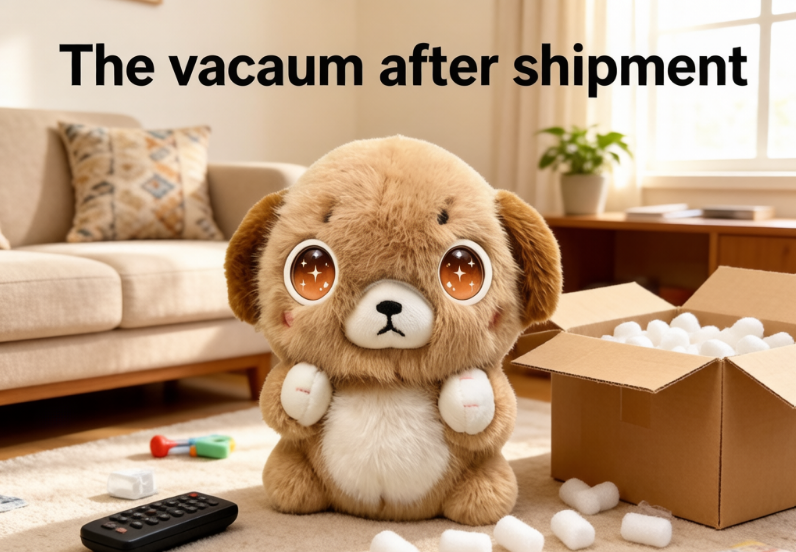
During this period, I have closely examined a batch of AI toy projects that are currently in the process of being developed. They are no longer the shiny “perfect specimens” in the display cases that remain stuck at the Demo stage. No, they have actually left the production line and some are already being mass-produced, some have crossed the ocean to secure cross-border orders, and some are engaging in negotiations with distributors, preparing for the peak moment of rapid growth.
The entire industry seems to have transcended the primitive era of “can it be done” and entered a more pragmatic business cycle. However, beneath this prosperous appearance, a cold reality is piercing me like an ice pick: shipping is not difficult, receiving orders is not difficult, but the challenge lies in receiving users’ next return.
Many people naively believed that as long as the so-called “AI” black box is successfully inserted into the toy, the dividends of this era could be securely captured. But the reality is that the goods in the warehouse are shipped out, the sales data on the e-commerce platforms are available, but once these products reach the users’ hands, they often start a countdown – not the physical lifespan countdown, but the emotional lifespan countdown. Everyone seems to be doing business vigorously, but in reality, the vast majority are manufacturing the same type of “problem products”.
I. Three Faces of False Prosperity
If you have also been looking at projects recently, you are likely to encounter three typical “industrial faces”:
The first type is the “AI + plush + voice” stitched monster. A common plush toy, with a voice module implanted and a large model connected, so it can “chat”. More advanced ones can even remember the user’s name and send greetings at specific times: “You should also be happy today”. Sounds very beautiful, like a qualified AI companion toy. But peeling off this layer of sugar coating, you will find the core is extremely empty. The novelty of the user usually lasts for no more than three days, and then it is put aside. It is more like a talking decoration rather than a warm companion.
The second type is the “AI + App + virtual character” hermit crab. These products focus on nurturing and companionship, but the toy itself is often just a cheap Bluetooth speaker or signal light, and the real soul is locked in the mobile phone App – conversations, settings, plots are all on the screen. The result is obvious: users eventually stay in the App, the expensive physical toy becomes an unnecessary “decor”, and even because it requires regular charging, it is regarded as a burden.
The third type is the “AI + functional product” copycat. For example, story machines and English practice machines under the guise of AI. They are essentially an “upgraded version of early education machines”. The problem is equally sharp: parents do not think this is a necessity because mobile phones and tablets can do better; children will not be interested in it for a long time because there is a lack of game and emotional connection.
II. The Root Problem, Not the Branches
Facing these predicaments, many practitioners’ first reaction is to patch up the branches: the voice is not natural enough? Replace with a better TTS. The response is not fast enough? Optimize the server. The cost is too high? Cut off some functions. But these are only treating the symptoms and not the root cause.
The real root problem lies in a core question that has been ignored by everyone: Why do users repeatedly use it?
You will discover an extremely cruel truth: It can talk, but no one wants to talk to it; it claims to be able to accompany, but no one relies on it; it has various functions, but there is no one indispensable usage scenario. We have manufactured a large number of “responsive” products, but we have never created a “worthy to respond” existence.
III. The accumulation of technology does not equal the birth of a product
Later, I attempted to abstract these failed projects and found that they share the same bad genetic structure: plush shell + voice module + large model + App. Then, developers defaulted that this was a complete AI toy product. This is actually a fatal logical fallacy. This is merely a “technical combination”, not a “product logic”. It’s like putting a camera, a screen, and a battery together, but that doesn’t mean you have created a truly functioning mobile phone. Similarly, forcing AI into a toy doesn’t mean the product is established. The former is the addition of physical components, while the latter is the closed loop of user experience.
IV. What is “Establishment”? From Usability to Dependability
So, what is a “established” product? I think about this question very simply and realistically: A product is established not because it “can be used”, but because it “will be continuously used”.
To put it more straightforwardly: Will users, without any reminder or promotional inducement, return to it again and again on their own initiative?
Most current AI toys only reach the first level: functional establishment. That is, they can have conversations, interact, and not report errors. This only proves that it “can be used”, just like a brick can be used to prop up a table leg. But a truly established product must cross to the second level: usage establishment. That is, users will repeatedly use it, rather than having a one-time experience. And the highest level is the third level: relationship establishment. Users develop a habit, dependence, and even emotional attachment to it.
The current situation is: Most products stop at the first level, a few touch the edge of the second level, and almost no product can reach the third level. However, the true commercial gold lies in the third level.
An established product will release some subtle signals: Users will subconsciously share trivial matters with it; they will recall it at a specific time point (such as before sleep); even they will have a little “emotional attachment” to it, such as worrying that it will be lonely at home alone when they are on a business trip. At this point, the product truly begins to have life.
V. Missing “Usage Reasons”
The current logic of AI toys is often passive: “When you want to chat, I can chat with you.” But the problem is that humans don’t inherently have the habit of “wanting to chat with a machine”. A truly established product must have an active logic: It will create “reasons for being used”.
This reason could be a unique role that a user cares about, a relationship that develops over time, or a feedback that a user expects every day (such as learning a new sentence every day). Without these internal driving forces, any external promotion and subsidies are in vain.
VI. The Ultimate Question: Who is This “Thing” You Made?
Finally, I want to pose the most essential question that almost no one has figured out: What is this AI toy you made?
Is it a tool? A pet? Or a “person”?
Most current products have an ambiguous identity. It’s like a pet, lacking true life感; it’s like a person, without an independent personality; it’s like a tool, not efficient and convenient enough. In the end, it degenerates into a strange monster: touching a little of everything, but nothing is established.
If you can’t clearly define the identity of your product in the user’s life and can’t answer the philosophical question “Who is it?”, then no matter how advanced your technology is, it is destined to be just an industrial waste product that flows in warehouses, gathers dust on shelves, and decays quickly in the hands of users. The future of AI toys does not belong to those talking machines, but to those that can be sincerely called “who” by users.